By the MeoBeauty Team
You know the feeling. The persistent itch that starts an hour after you shower. The glance in the mirror to check for “snow” on your shoulders before a meeting.
It’s frustrating, embarrassing, and exhausting. You’ve likely tried the generic supermarket bottles, only to find they dry out your hair or smell like industrial cleaner.
Here is the truth: Not all dandruff is the same.
Treating a dry scalp with a harsh antifungal shampoo will only make the itching worse. Conversely, moisturizing a fungal flare-up will just feed the yeast causing the problem.
At Meo Beauty, we believe in treating the root cause, not just the symptoms. This guide breaks down the science of scalp care and helps you find the exact formula your scalp needs to finally stop the itch.
Diagnosis First: Is it Dandruff, Dry Scalp, or Psoriasis?
Before you buy another bottle, you need to know what you are fighting. Many people confuse simple dry skin with seborrheic dermatitis (true dandruff). Treating them requires opposite approaches.
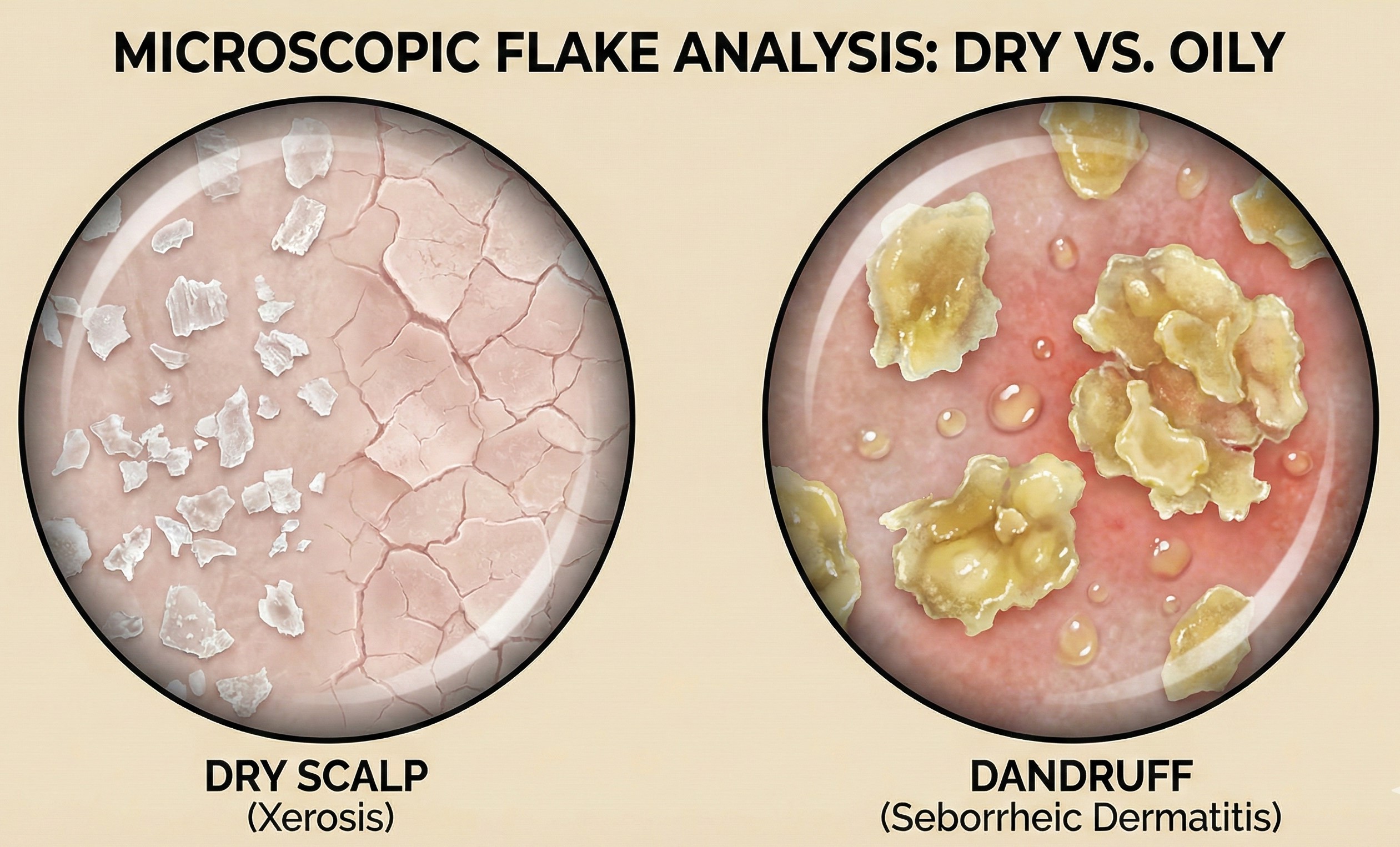
Quick Diagnosis Guide:
| Feature | Dry Scalp | Dandruff (Seborrheic Dermatitis) |
| Flake Appearance | Small, white, dust-like | Large, oily, yellow or white |
| Scalp Texture | Tight, dry, feels “thirsty” | Oily, greasy, inflamed |
| Cause | Lack of moisture, cold weather | Malassezia yeast overgrowth, excess oil |
| The Fix | Hydrating serums & oils | Antifungal active ingredients |
If your flakes are small and your scalp feels tight, skip the harsh chemicals. You need hydration. If the flakes are larger and oily, you need a medicated solution.
The “Big 4” Ingredients: What to Look For on the Label
Forget the brand name. Look at the back of the bottle. The effectiveness of any anti-dandruff shampoo comes down to its active ingredient.
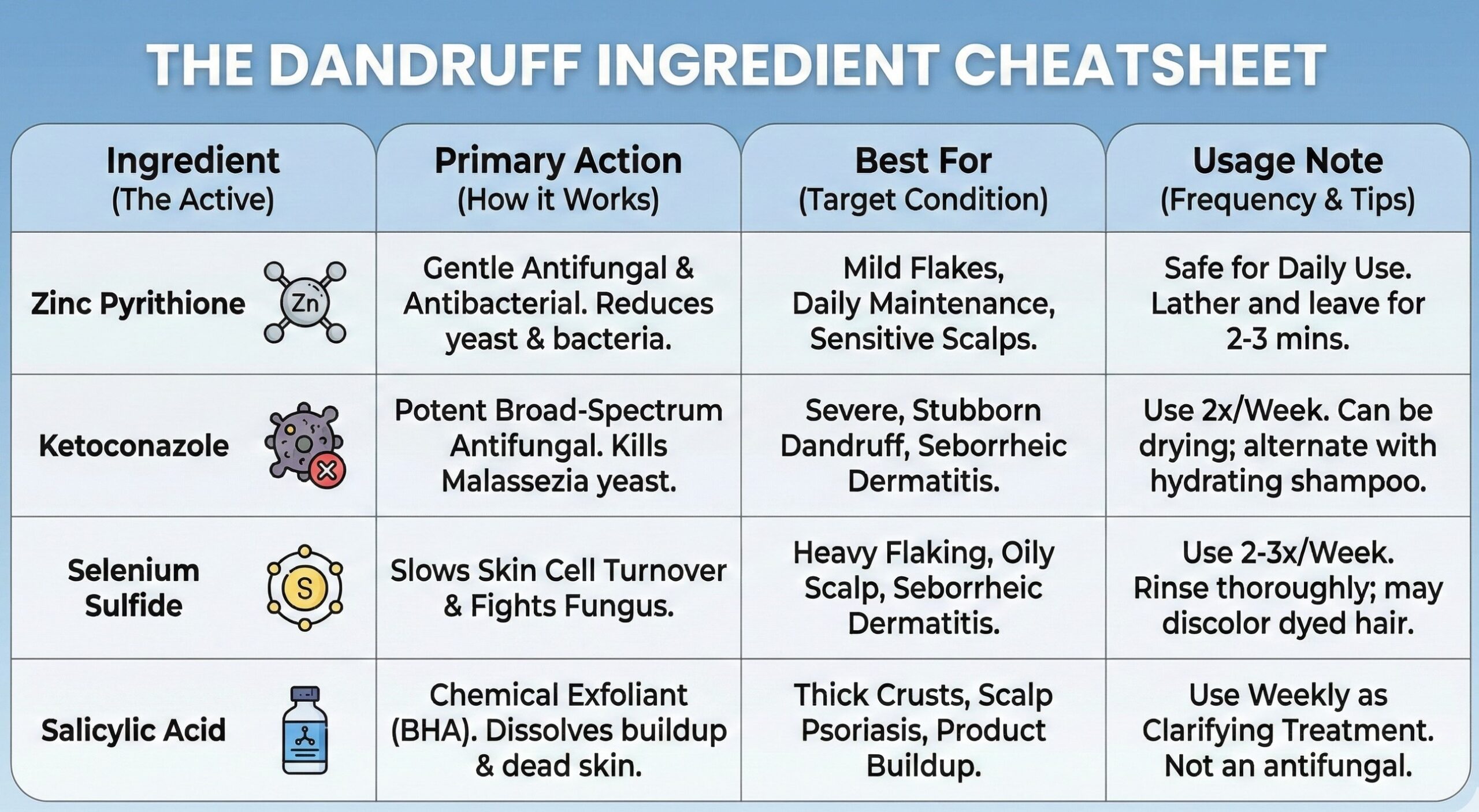
Most effective shampoos rely on one of these four powerhouses:
- Zinc Pyrithione: The most common daily-use ingredient. It reduces fungus and bacteria gently. Good for mild cases.
- Ketoconazole: The heavy hitter. It is a broad-spectrum antifungal that targets Malassezia yeast aggressively. Best for stubborn dandruff.
- Selenium Sulfide: Slows down skin cell death and fights fungus. It’s highly effective but can be drying and may discolor dyed hair if not rinsed well.
- Salicylic Acid: A chemical exfoliant (BHA). It doesn’t kill fungus, but it dissolves the “glue” holding dead skin cells together. Essential for removing thick buildup.
The Best Anti-Dandruff Shampoos for Every Scalp Type
We have categorized these recommendations based on specific scalp needs rather than a generic ranking.
1. Best Overall for Seborrheic Dermatitis (The Heavy Hitters)
Top Pick: Nizoral A-D
If you have stubborn, recurring dandruff, you need Ketoconazole. Nizoral contains 1% Ketoconazole, which disrupts the cell membranes of the fungus causing your itch. It attacks the problem directly at the source.
- Best for: Severe itching, oily flakes, fungal flare-ups.
- Use: 2 times per week. Alternate with a moisturizing shampoo.
2. Best for Sensitive & Dry Scalps (Sulfate-Free)
Top Pick: Jupiter Balancing Shampoo
Many medicated shampoos strip the scalp, damaging your moisture barrier. Jupiter uses Zinc Pyrithione but pairs it with coconut oil and algae extract. It’s sulfate-free, meaning it won’t ruin your hair color or leave your scalp feeling tight.
- Best for: People who need flake control but hate how medicinal shampoos smell and feel.
- Use: Safe for daily use.
3. Best for Product Buildup & Exfoliation
Top Pick: Neutrogena T/Sal
Sometimes the issue isn’t fungus; it’s buildup. Layers of dry shampoo, hairspray, and dead skin can clog hair follicles. Salicylic Acid breaks this down. T/Sal is fragrance-free and purely functional. It resets your scalp.
- Best for: Thick crusty patches, psoriasis scales, or heavy product users.
- Use: Once a week as a clarifying treatment.
4. Best Natural Alternative
Top Pick: Tea Tree Special Shampoo
If you prefer to avoid clinical actives, Tea Tree Oil is a potent natural antimicrobial and anti-inflammatory agent. It provides a cooling “tingle” that instantly relieves itchiness. While less powerful than Ketoconazole, it is excellent for maintenance.
- Best for: Mild dandruff and those seeking natural ingredients.
- Use: 2-3 times per week.
How to Build an Effective Anti-Dandruff Routine
Buying the right shampoo is only half the battle. You have to use it correctly. Most people wash it off too quickly. The 3-Minute Rule
Active ingredients need time to work.
- Lather the shampoo into your scalp (focus on the roots, not the ends).
- Leave it on for 3 to 5 minutes. This allows the antifungal agents to penetrate the skin.
- Rinse thoroughly with cool or lukewarm water.
Don’t Skip Conditioner
Dandruff shampoos are drying. Always follow up with a moisturizing conditioner. Apply it from the mid-lengths to the ends to avoid clogging your freshly cleaned scalp.
Common Myths About Itchy Scalps
Let’s clear up a few misconceptions that might be hurting your progress.
- Myth: “Dandruff is contagious.”
- Fact: It is not. You cannot catch dandruff from someone else’s comb. It is caused by your own scalp’s reaction to natural yeast.
- Myth: “Oil treatments cure dandruff.”
- Fact: Applying heavy oils (like olive or coconut oil) directly to a seborrheic dermatitis flare-up can feed the yeast and make it worse. Stick to formulated scalp serums.
- Myth: “Hot water cleans better.”
- Fact: Hot water strips natural oils, triggering inflammation and causing your scalp to produce more oil to compensate.
Frequently Asked Questions (FAQ)
Why does my scalp itch even after washing?
It is likely due to product buildup or a compromised moisture barrier.
If you use harsh sulfates, you may be stripping your scalp, causing “rebound irritation.” Alternatively, you may not be rinsing your shampoo out completely. Switch to a pH-balanced, sulfate-free formula and ensure you rinse for at least 60 seconds.
Can I use anti-dandruff shampoo every day?
It depends on the active ingredient.
Formulas with Zinc Pyrithione are generally gentle enough for daily use. However, strong antifungals like Selenium Sulfide or Ketoconazole can be very drying. Use these 2-3 times a week and alternate with a hydrating shampoo to maintain scalp health.
What is the strongest ingredient for dandruff?
Ketoconazole and Selenium Sulfide are the gold standards for severe cases.
Ketoconazole (found in Nizoral) is a broad-spectrum antifungal. Selenium Sulfide (found in Selsun Blue) fights fungus and slows skin cell turnover. For extreme cases that don’t respond to over-the-counter options, a dermatologist may prescribe Ciclopirox.
Is dandruff caused by dry skin?
No, true dandruff is usually caused by an oily scalp.
Dandruff is a result of the Malassezia yeast feeding on excess sebum (oil). If you have small, dry, white flakes without oiliness, you likely have Dry Scalp, not dandruff. Treat dry scalp with hydration, not antifungals.
Does hot water make dandruff worse?
Yes, hot water triggers inflammation and dryness.
High heat strips the lipids from your scalp barrier. This irritation causes your skin to panic and overproduce oil, which feeds the dandruff-causing yeast. Always wash with lukewarm water.
Ready to reclaim your scalp health? For more tips on hair hydration and skincare, explore our latest guides at Meo Beauty.