You apply it every day (we hope), but do you actually know what’s sitting on your skin?
Standing in the skincare aisle can feel overwhelming. You have two main choices: mineral or chemical. One promises a natural shield; the other offers invisible protection. Meanwhile, headlines scream about “toxins” in your bloodstream or “white casts” ruining your photos.
It’s time to cut through the noise. At Meo Beauty, we believe your skincare choices should be based on science, not fear.
This guide breaks down exactly how each sunscreen works, safety concerns, and which formula is actually best for your specific skin concerns.
The Core Difference: “The Shield” vs. “The Sponge”
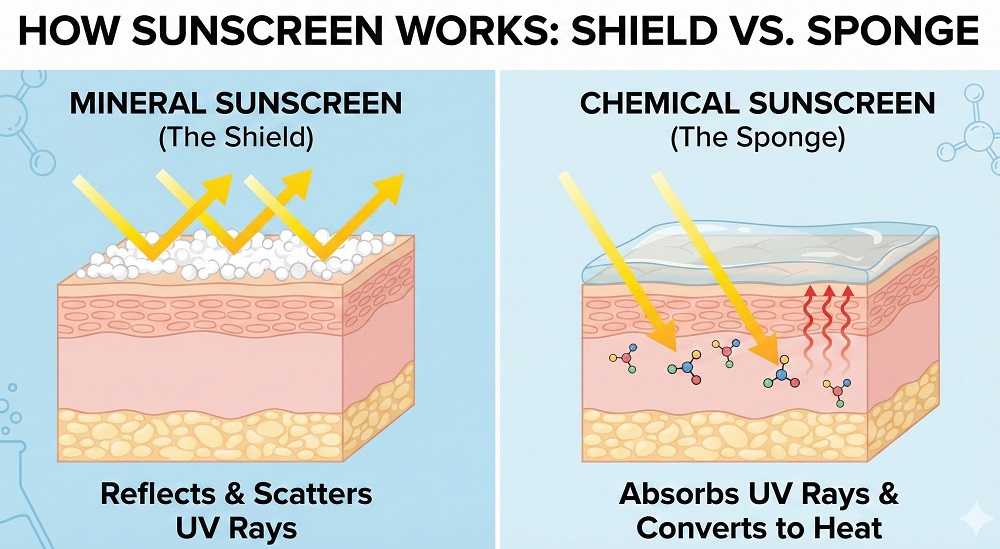
To choose the right product, you first need to understand the mechanism. It comes down to how they handle UV Radiation.
-
Mineral Sunscreen (Physical): Think of this as a shield. It sits on top of your skin and physically reflects UV light away from your body.
-
Chemical Sunscreen (Organic): Think of this as a sponge. It absorbs into the top layer of your skin, catches UV rays, converts them into heat, and releases that heat from the body.
Both methods are effective at preventing sunburn and DNA damage. The “better” option depends entirely on your skin’s tolerance and your lifestyle.
Chemical Sunscreen Explained (The “Invisible” Protector)
Chemical sunscreens are the most common type you’ll find. They use “organic” (carbon-based) compounds like Avobenzone, Oxybenzone, and Octinoxate to create a chemical reaction that neutralizes UV rays.
The Major Benefits
Why do people love them? Elegance.
-
Zero White Cast: Because the filters absorb into the skin, they are usually clear. This is a huge advantage for deeper skin tones.
-
Lightweight Texture: They tend to be thinner and easier to spread, making them ideal for daily wear under makeup.
-
Sweat Resistance: They generally hold up better during swimming or heavy exercise.
The Downsides
The chemical reaction that protects you also creates heat. For most people, this is unnoticeable. However, if you suffer from Melasma or Rosacea, this trapped heat can actually trigger flare-ups. Additionally, specific ingredients like Avobenzone are known to sting the eyes.
Mineral Sunscreen Explained (The Physical Blocker)
Mineral sunscreens rely on two main ingredients: Zinc Oxide and Titanium Dioxide. These are “inorganic” filters recognized by the FDA as generally safe and effective.
Why Sensitive Skin Loves It
Mineral formulas are non-comedogenic (won’t clog pores) and rarely cause irritation. Because they sit on the surface, they are excellent for acne-prone or highly sensitive skin. They also work immediately upon application—no need to wait 20 minutes before going outside.
Addressing the “Ghost” Factor
The biggest complaint with mineral SPF is the infamous white cast. Zinc is a white powder, and historically, it left a chalky residue.
However, modern formulations use micronized zinc (particles broken down to be less visible) or add tint. A Tinted Mineral SPF is often the holy grail: it blocks visible light (which worsens hyperpigmentation) and eliminates the white cast.

The Safety Debate: Is Chemical Sunscreen Dangerous?
You may have read that chemical sunscreens are “toxic” or “hormone disruptors.” Let’s look at the facts.
Bloodstream Absorption
A recent FDA study showed that ingredients like Oxybenzone can be absorbed into the bloodstream. This sounds scary. However, “absorption” does not equal “toxicity.”
There is currently no clinical evidence that chemical sunscreens cause health issues in humans at standard usage levels. The risk of skin cancer from skipping SPF is infinitely higher than the theoretical risk of these ingredients.
The “Reef-Safe” Reality
This concern is more valid. Research suggests that Oxybenzone and Octinoxate can contribute to coral bleaching.
If you are swimming in the ocean, we recommend choosing a “Reef-Safe” mineral option to minimize your environmental footprint.
Which One Wins? (The Verdict by Skin Type)
There is no universal winner. The best sunscreen is the one you will actually wear every day. Here is the Meo Beauty breakdown:
| If you have… | The Winner Is… | Why? |
| Acne-Prone / Sensitive Skin | Mineral | Zinc is anti-inflammatory and won’t clog pores. Chemical filters may irritate breakouts. |
| Darker Skin Tones | Chemical OR Tinted Mineral | Chemical leaves no cast. Tinted mineral offers extra protection against hyperpigmentation without the chalky look. |
| Melasma / Rosacea | Tinted Mineral | Avoids the heat buildup of chemical filters; iron oxides in the tint block damaging visible light. |
| Active Lifestyle (Swimming) | Chemical / Hybrid | Offers superior water resistance and won’t rinse off as easily as physical barriers. |
Frequently Asked Questions (FAQ)
What is the main difference between mineral and chemical sunscreen?
Mineral sunscreens reflect UV rays like a shield, while chemical sunscreens absorb UV rays like a sponge.
Nuance: Mineral options sit on top of the skin and are active immediately. Chemical options penetrate the top layer of skin and require about 15-20 minutes to become fully effective.
Is mineral sunscreen better than chemical for acne-prone skin?
Yes, mineral sunscreen is generally superior for acne-prone skin.
Nuance: Ingredients like Zinc Oxide are non-comedogenic and have natural soothing properties. Chemical filters can sometimes cause heat buildup or irritation, which may aggravate existing inflammation or breakouts.
Which sunscreen is safer for pregnancy?
Mineral sunscreens are widely considered the safest choice during pregnancy.
Nuance: Because they are not absorbed into the bloodstream, they pose zero risk of hormonal disruption. Many OBGYNs recommend avoiding Oxybenzone during pregnancy as a precaution.
Do mineral sunscreens always leave a white cast?
No, modern micronized and tinted formulas have largely solved this issue.
Nuance: While traditional zinc formulas were thick and white, new technology breaks the particles down to be nearly invisible. Tinted options are specifically designed to blend with various skin tones.
Can I mix mineral and chemical sunscreens?
No, you should not mix them yourself in the palm of your hand.
Nuance: Certain ingredients (like Avobenzone and uncoated Zinc Oxide) can destabilize each other, reducing your protection. If you want the benefits of both, buy a formulated “Hybrid Sunscreen” where the chemist has already stabilized the ingredients.
Looking for more expert advice? Check out our guide on The Ultimate Anti-Aging Skincare Routine for Your 40s to see where SPF fits into your regimen.