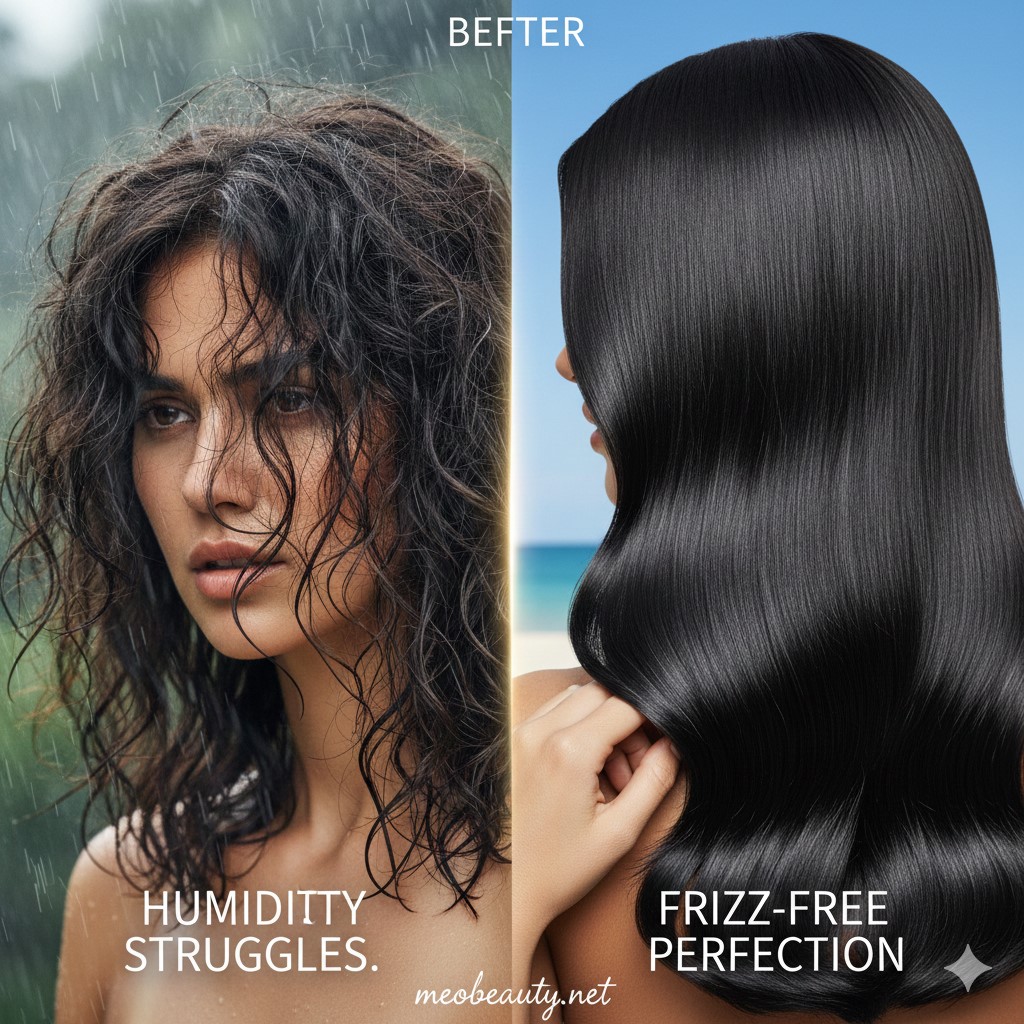
You spend an hour perfecting your blowout, only to step outside and watch your hair expand into a halo of frizz. It is frustrating, predictable, and feels impossible to control. Most people blame the “weather,” but the real culprit is a molecular battle happening on your scalp.
If you don’t seal your hair’s cuticle, the atmosphere will do it for you with disastrous results. This guide breaks down the biological reason your hair reacts to moisture and how to build a weather-proof shield that lasts.
read more articles at: https://meobeauty.net/
Why Does Humidity Cause Frizz? (The Molecular Truth)
Your hair is primarily made of keratin proteins held together by chemical bonds. Humidity introduces high levels of water vapor into the air. When your hair is dry or porous, it acts like a sponge.
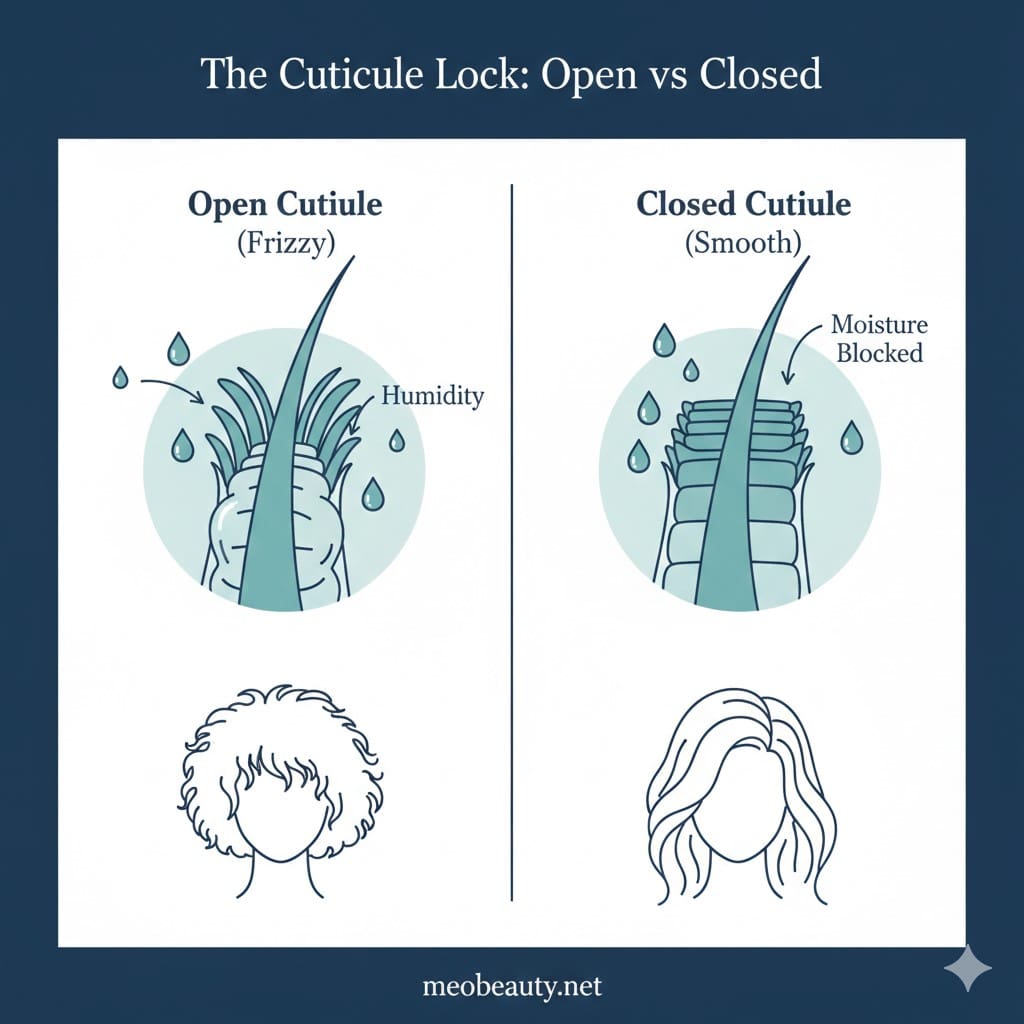
The cuticle layer—the outer shingle-like structure of the hair—lifts to absorb this atmospheric moisture. This causes the hair shaft to swell and fold back on itself. The result is the frayed, “poofy” texture we call frizz.
Step 1: The “Cold-Seal” Wash Routine
Control starts in the shower, not at your vanity. To fight humidity, you must manage your hair’s hygroscopic properties before you ever pick up a dryer.
- Use Sulfate-Free Shampoo: Harsh detergents strip away sebum, the natural oil that acts as your first line of defense against moisture.
- Deep Condition the Mid-Lengths: This fills the gaps in your hair’s internal structure so there is “no room” for humidity to enter.
- The Cold Water Rinse: This is the most underrated step. Cold water constricts the cuticle, laying it flat.
- Microfiber Only: Never rub your hair with a cotton towel. This creates friction and raises the cuticle instantly.
Step 2: Choosing the Right Anti-Humectant Shield
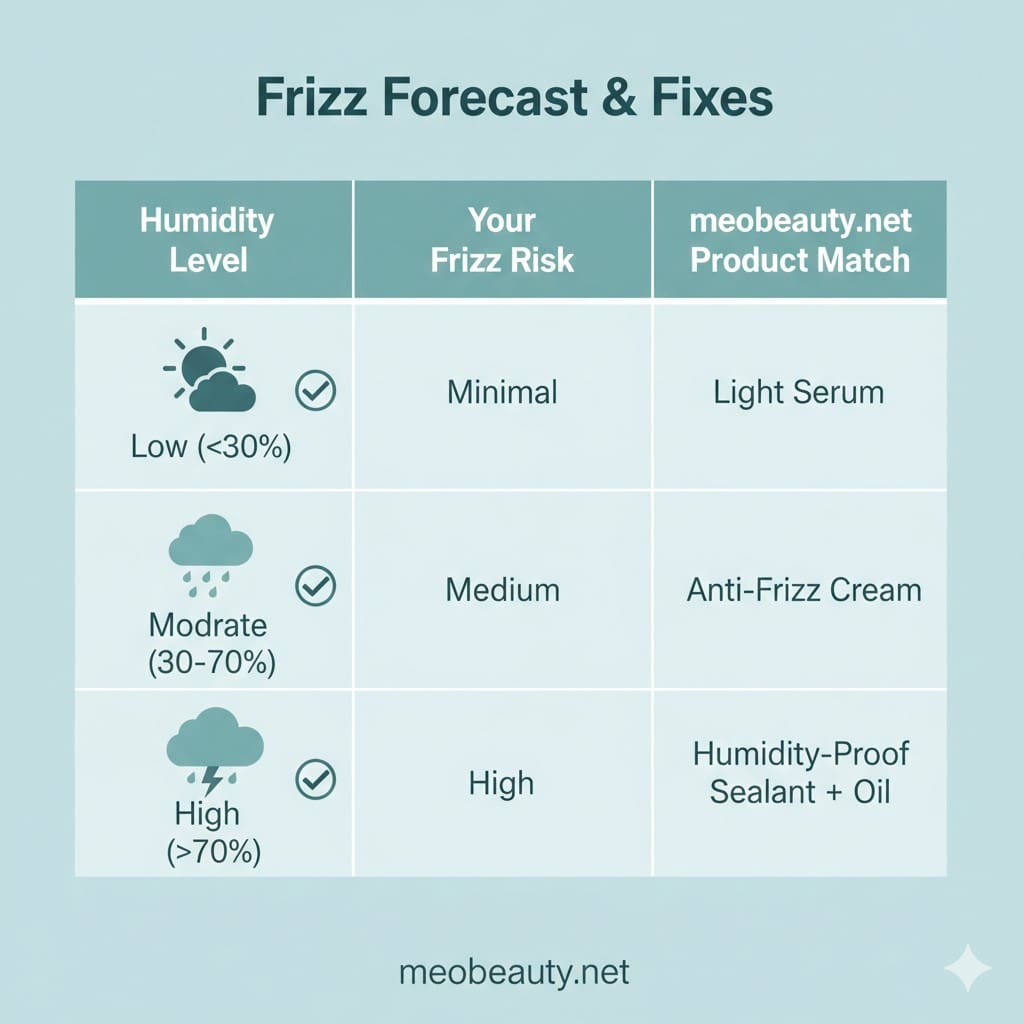
Not all hair products are created equal. In high humidity, the wrong ingredients can actually pull moisture into your hair, making the problem worse.
Humectants vs. Anti-Humectants
| Ingredient Type | Function | Best For… |
| Humectants (e.g., Glycerin) | Pulls moisture from the air into the hair. | Dry environments or low humidity. |
| Anti-Humectants (e.g., Silicones, Oils) | Creates a hydrophobic seal to block moisture. | High humidity and rainy days. |
In humid conditions, look for Argan Oil or Jojoba Oil. These act as natural sealants. If you use a product containing glycerin, ensure you layer a “sealing” serum over it to lock the moisture out.
Step 3: Heat Styling Without the Halo Effect
How you dry your hair determines how it behaves outdoors. Ionic hair dryers are essential here. They emit negative ions that break down water molecules faster and neutralize the static charges that cause strands to fly apart.
Always point the nozzle downward along the hair shaft. This reinforces the “flat” position of the cuticle. Once your hair is 100% dry, apply a finishing spray. Even 5% dampness will act as a magnet for humidity once you leave the house.
The Frizz-Free Maintenance Checklist for meobeauty.net Readers
Maintaining sleek hair is a long-term game of hydration and protection. At meobeauty.net, we believe that understanding the “why” behind your hair care leads to better results.
- Check the Dew Point: If the dew point is high, opt for a sleek bun or braid.
- Seal the Ends: Use a drop of oil every morning to keep the oldest part of your hair protected.
- Sleep on Silk: Reduce friction overnight to keep the cuticle smooth for the next day.
FAQs
Why does humidity make my hair frizzy?
Humidity forces the hair cuticle to open and absorb environmental water. This causes the keratin proteins in the hair shaft to swell and twist, creating a frayed, frizzy appearance. When your hair lacks internal moisture, it seeks it from the air. Keeping your hair hydrated from within prevents it from “reaching out” to the atmosphere.
What is the best product for frizzy hair in high humidity?
Anti-humectants and sealants like Argan oil or humidity-resistant polymers are best. These ingredients create a hydrophobic barrier that prevents water vapor from entering the hair shaft and disrupting your style.
Look for serums specifically labeled “weather-proof” or “humidity-resistant” at meobeauty.net for the best results.
Does cold water help with frizz?
Yes. A cold water rinse at the end of your shower flattens the hair cuticle. A flat, sealed cuticle reflects light better and prevents external moisture from entering the hair.
This simple habit makes your hair appear shinier and provides a smoother foundation for styling products.
Can I use glycerin in humid weather?
Glycerin is a humectant that can cause hair to swell in high humidity. It is best to avoid it in tropical climates unless it is layered under a heavy sealant.
In 80% humidity, glycerin can pull too much water into the hair, leading to instant frizz.
How do I stop frizz after straightening my hair?
Apply a silicone-based finishing serum or a dry shielding spray immediately after ironing. This “locks” the straightened proteins in place and prevents them from absorbing moisture.
Ensure your hair is completely cool before going outside, as residual heat can make the hair more susceptible to environmental changes.