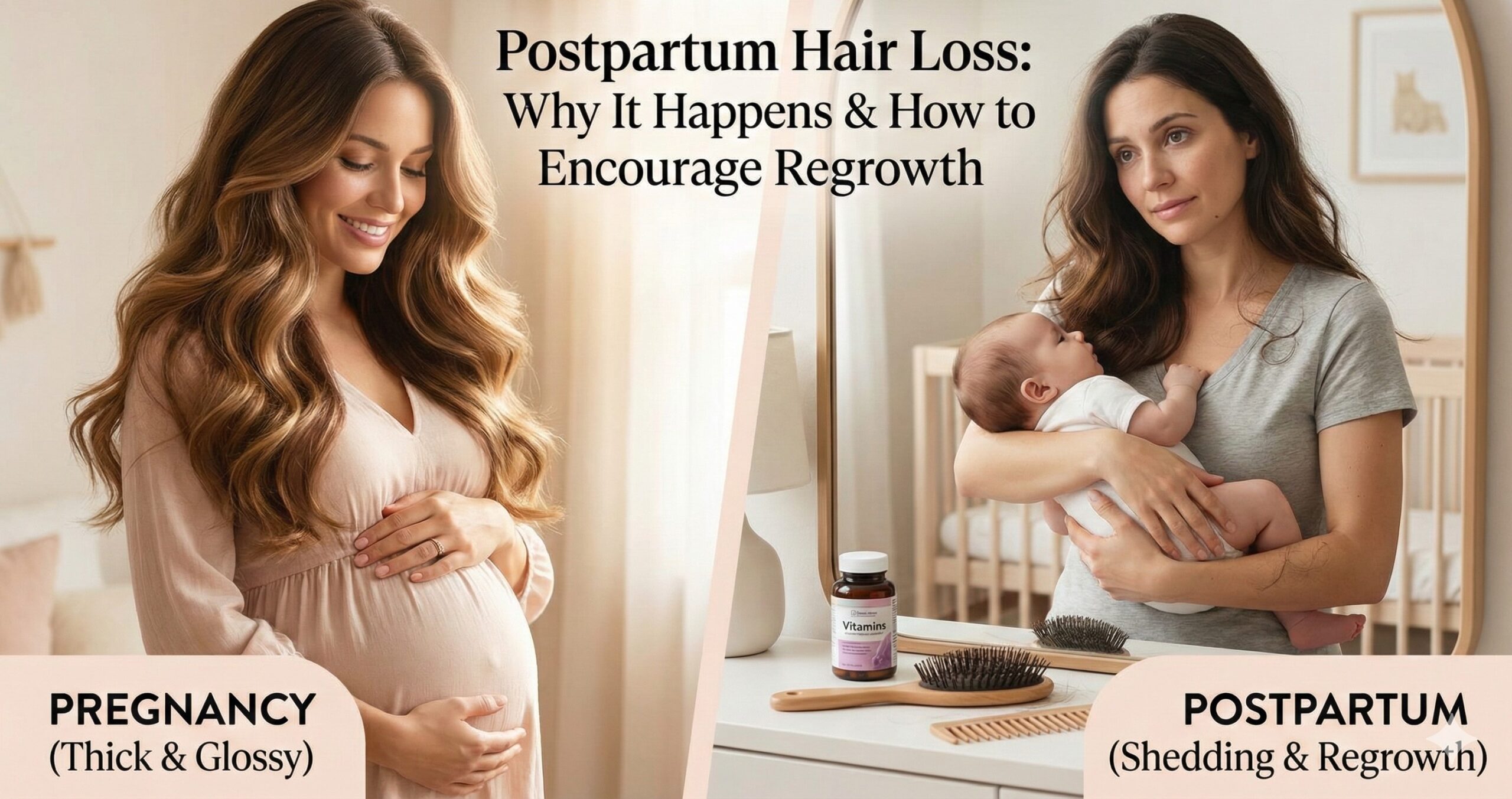
You finally made it through the sleepless nights and the physical recovery of childbirth. Just when you start feeling like yourself again, you notice it: the drain is clogged, your brush is full, and you’re seeing clumps of hair on your pillow.
It is alarming. It feels unfair. But most importantly, it is temporary.
At Meo Beauty, we believe in beauty solutions backed by science, not fear. If you are dealing with postpartum shedding, you are likely part of the 40-50% of new moms experiencing Telogen Effluvium. Here is why it is happening and exactly how to manage it.
The “Mom Shed” Explained: Why Is This Happening?
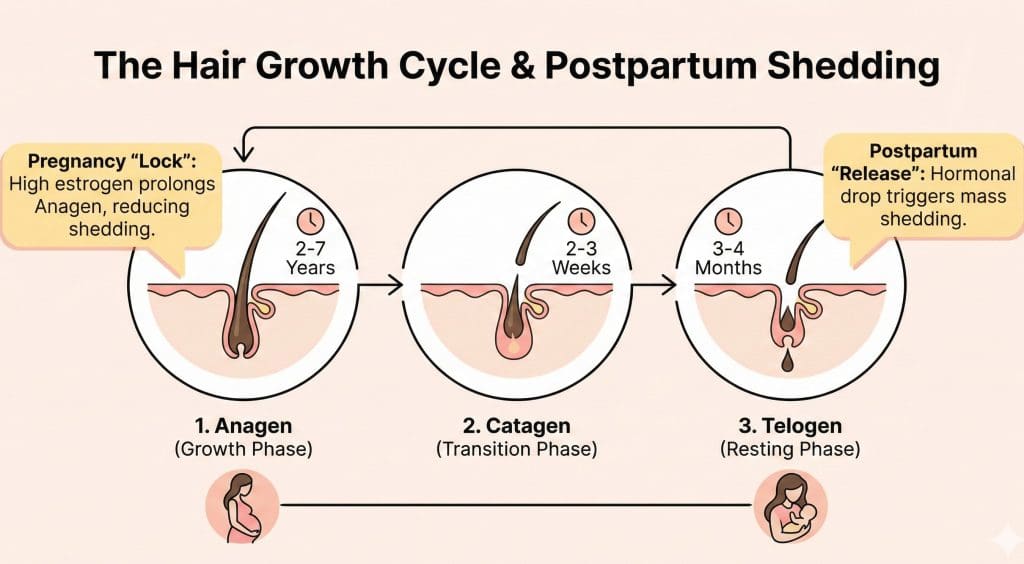
To understand why your hair is falling out, you need to understand the hair growth cycle. Your hair is always in one of three stages:
- Anagen (Growth): The active growing phase.
- Catagen (Transition): When the follicle shrinks.
- Telogen (Resting): When the hair rests before falling out to make room for new growth.
Pregnancy Hair vs. Postpartum Hair
During pregnancy, your estrogen levels skyrocket. This hormone “locks” your hair in the Anagen (Growth) phase. Hairs that would normally fall out just keep growing. This is why many women enjoy the thickest, glossiest hair of their lives while pregnant.
Once you give birth, those estrogen levels drop sharply to return to normal. This sudden drop shocks your hair follicles. All the hair that should have fallen out over the last nine months—plus your normal daily shedding—rushes into the Telogen (Resting) phase all at once.
The Timeline: How Long Does Postpartum Hair Loss Last?
The waiting game is the hardest part. Because hair cycles are slow, you won’t notice the shedding immediately after birth.
- 0–3 Months Postpartum: Minimal shedding. Hormones are still stabilizing.
- 3–4 Months Postpartum: Peak Shedding. This is when most moms panic. You may lose up to 400 hairs a day (vs. the normal 80).
- 6–12 Months Postpartum: Shedding slows down. You will start seeing “baby hairs” around your hairline.
- 1 Year Postpartum: For most women, hair density returns to pre-pregnancy levels.
Note: If your shedding continues heavily after your baby’s first birthday, it may be time to investigate other causes like thyroid imbalances.
Common Myths: Does Breastfeeding Cause Hair Loss?
Let’s debunk this immediately: Breastfeeding does not cause hair loss.
The shedding is triggered by the drop in pregnancy hormones (estrogen and progesterone), which happens whether you breastfeed or bottle-feed.
However, breastfeeding does demand a lot of energy and nutrients from your body. If you aren’t eating enough to support both milk production and your own recovery, your body will prioritize the baby. Your hair follicles—which are considered “non-essential” by your body—will be the first to lose out on nutrients.
Internal Remedies: The “Postpartum Hair Diet”
You cannot stop the hormonal drop. But you can control the quality of the new hair growing in. Strong regrowth relies on specific nutrients.
Best Vitamins for Hair Recovery
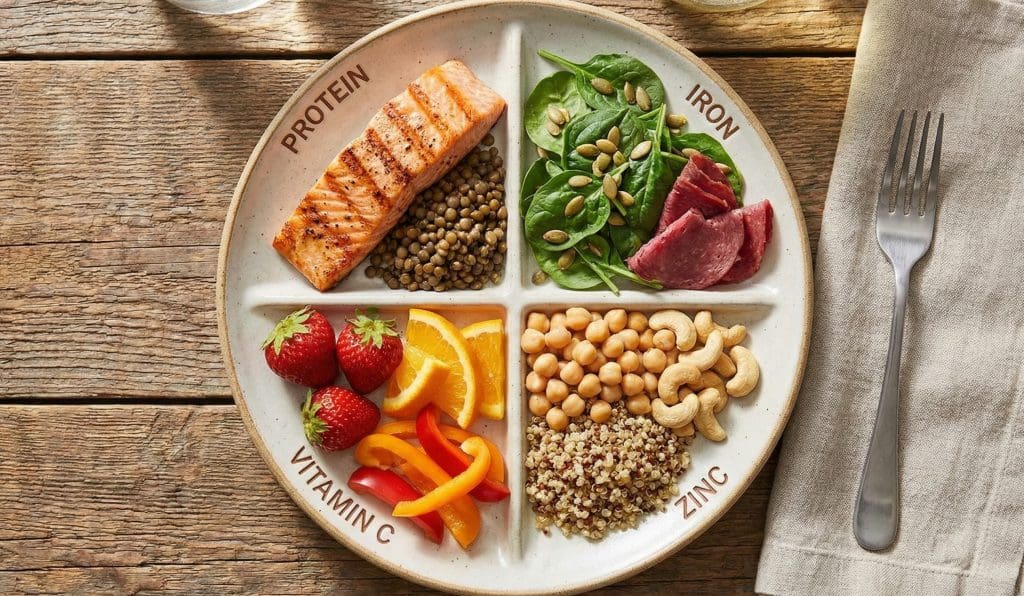
Focus on these key nutrients to support your follicles:
- Iron: Essential for carrying oxygen to your hair follicles. Low iron (anemia) is a common cause of continued thinning.
- Biotin (Vitamin B7): Helps build the infrastructure of keratin (hair protein).
- Vitamin C: Helps your body absorb iron and produce collagen.
- Zinc: Vital for hair tissue growth and repair.
Comparison: Hormonal vs. Nutritional Shedding
| Feature | Hormonal Shedding (Postpartum) | Nutritional Shedding (Deficiency) |
| Primary Cause | Estrogen drop after birth. | Lack of Iron, Zinc, or Protein. |
| Timing | Starts ~3 months postpartum. | Can happen anytime. |
| Pattern | Diffuse, overall thinning. | Thinning + brittle/dry texture. |
| Duration | Self-corrects in 6-12 months. | Persists until diet is fixed. |
| Prevention | Cannot be prevented. | Preventable with diet/supplements. |
External Care: Managing Hair While It Regrows
Your hair is fragile right now. The new “baby hairs” coming in are fine and easily broken.
1. Be Gentle with Wet Hair
Wet hair is at its weakest. Avoid brushing vigorously after a shower. Instead, use a wide-tooth comb to detangle gently, starting from the ends and working your way up.
2. The “Mom Bun” Danger
We know the messy bun is a survival tactic. But pulling your hair back tightly puts tension on your hairline, leading to Traction Alopecia.
- Do: Use silk scrunchies or spiral hair ties.
- Don’t: Use rubber bands or pull hair tight while wet.
3. Volume Tricks
While you wait for regrowth, visual tricks help. Use a volumizing shampoo (avoid heavy conditioners on roots) and consider a shorter cut. The “Mom Chop” isn’t a cliché—it removes weight, making thin hair look fuller and healthier.
Red Flags: When to See a Dermatologist
While heavy shedding is normal, certain symptoms warrant professional attention.
- Round, smooth bald patches: This could be Alopecia Areata, an autoimmune condition.
- Itching or burning scalp: Normal shedding doesn’t hurt.
- Shedding past 12 months: Could indicate postpartum thyroiditis or chronic iron deficiency.
Frequently Asked Questions (FAQ)
How long does postpartum hair loss last?
Postpartum hair loss typically peaks at 4 months and resolves by 12 months.
Most women notice the shedding slowing down significantly by the time their baby is 6 months old. If it persists beyond a year, consult a doctor.
Can you prevent postpartum hair loss?
No, you cannot prevent hormonal shedding, but you can minimize breakage.
The initial shed is a biological reset. However, taking postnatal vitamins, eating protein, and avoiding tight hairstyles will ensure your new growth comes in strong and healthy.
What vitamins help with postpartum hair loss?
Biotin, Iron, Vitamin C, and Zinc are the most effective nutrients for regrowth.
Biotin strengthens hair structure, while Iron is critical for preventing anemia-related shedding. Always continue your prenatal or postnatal vitamin for at least 6 months after birth.
Is it normal to have bald spots after pregnancy?
No, distinct bald spots are not normal for postpartum shedding.
Standard postpartum loss (Telogen Effluvium) causes diffuse thinning all over the head. If you see coin-sized bald patches, it may be a separate issue like Alopecia Areata.
For more expert beauty tips, skincare advice, and product reviews, explore the rest of our guides at Meo Beauty.