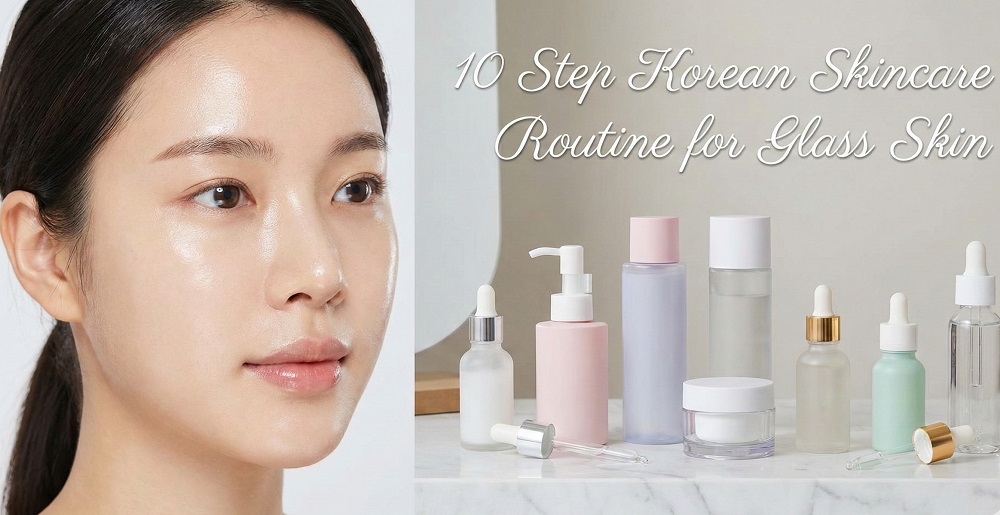
Imagine skin so luminous, smooth, and even-toned that it looks like a pane of glass. You’ve seen it on your Instagram feed and in K-Dramas—that undeniable “chok-chok” (dewy) glow.
But when you look up how to achieve it, you are hit with a wall of confusion. Ten steps? Expensive products? Hours in front of the mirror every night? It feels intimidating and frankly, impossible for a busy schedule.
The truth is, the “10-Step Korean Skincare Routine” isn’t about using more products just for the sake of it. It is about using the right products in the correct order to maximize hydration and barrier health.
At https://meobeauty.net/, we believe skincare should be logical, not overwhelming. This guide breaks down the famous regimen into a clear, actionable roadmap to help you achieve that coveted porcelain finish without the stress.
What is “Glass Skin”? (More Than Just Hype)
“Glass Skin” is a term that originated in Korea to describe skin that is exceptionally smooth, even-toned, and lustrous. Ideally, it looks poreless and translucent.
Unlike Western beauty trends that often rely on matte foundations or highlighters to fake a glow, glass skin focuses on the health of the skin itself. It requires two things: intense hydration and a compromised-free skin barrier.
The goal is to trap moisture deep within the layers of the dermis so that the skin looks plump and reflects light naturally from within.
The Golden Rule: Thinnest to Thickest Application
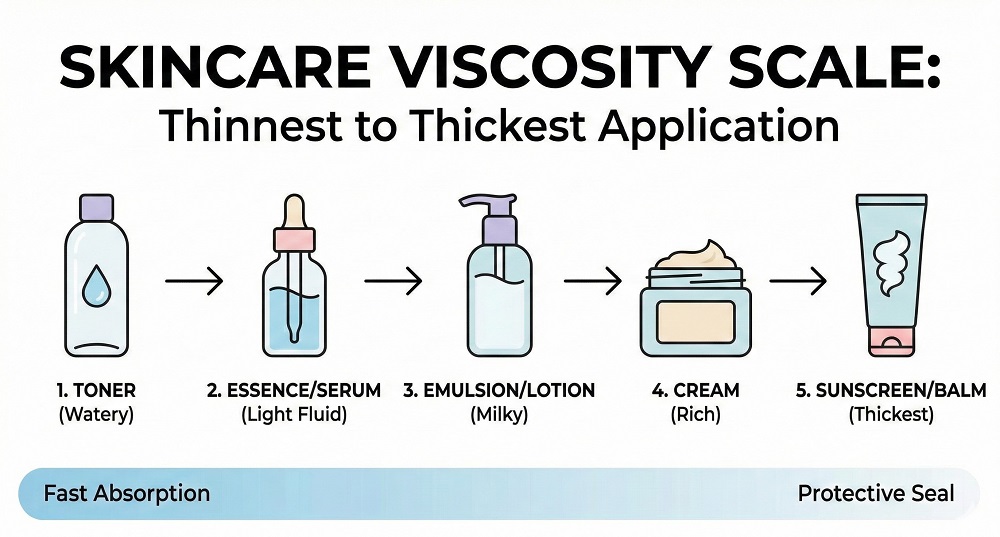
Before you buy a single product, you must understand the physics of skincare layering. If you apply a thick cream before a watery toner, the toner will never penetrate. It will simply sit on top of the cream and evaporate.
To ensure your skin actually absorbs the nutrients, always apply products based on viscosity.
The Rule: Start with the most watery (thinnest) consistency and end with the richest (thickest) texture. This allows the smaller molecules to penetrate first, while the heavier oils seal everything in at the end.
Step-by-Step Breakdown: The 10-Step Korean Ritual
Step 1 & 2: The Double Cleanse (Oil + Water)
This is the foundation of K-Beauty. A single wash is rarely enough to remove everything.
-
Oil Cleanser: Oil attracts oil. This step dissolves makeup, SPF, and excess sebum that water cannot budge. Massage it onto dry skin, emulsify with water, and rinse.
-
Water-Based Cleanser: Follow up with a gentle foam or gel cleanser. This removes sweat, dirt, and any remaining oil residue.
Result: A perfectly clean canvas that isn’t stripped of natural moisture.
Step 3: Gentle Exfoliation (The Canvas Prep)
You cannot achieve a glass-like reflection if your surface is rough. Exfoliators remove dead skin cells that clog pores and dull your complexion.
Caution: Do not do this daily. Focus on chemical exfoliants (AHAs or BHAs) 2-3 times a week. Over-exfoliating damages the moisture barrier, which is the opposite of what we want.
Step 4: Toner (The Hydration Reset)
Forget the stinging, alcohol-heavy astringents of the past. Korean toners are designed to hydrate and balance your skin’s pH levels after cleansing.
Think of your skin like a sponge. A dry sponge doesn’t absorb soap well. A damp sponge absorbs everything instantly. Toner makes your skin “damp” and ready for the treatments to follow.
Step 5, 6, & 7: The Treatments (Essence, Serum, Ampoule)
This is the heart of the routine. These steps deliver concentrated active ingredients directly to problem areas.
Many people are confused by the difference between these three. Here is a quick breakdown:
| Feature | Essence | Serum / Ampoule |
| Texture | Watery, lightweight fluid. | Viscous, thicker, often gel-like. |
| Primary Goal | General hydration & cell turnover. | Targeted treatment (acne, dark spots). |
| Concentration | Lower concentration of actives. | High concentration of actives. |
| Usage | Can be layered multiple times (7-Skin Method). | Use sparingly on specific areas. |
Step 8: Sheet Masks (The Soul of K-Beauty)
Sheet masks act as an occlusive barrier, forcing the essence into your skin rather than letting it evaporate. You don’t need to do this every day. Use them before a big event or when your skin feels particularly parched.
Step 9: Eye Cream
The skin around your eyes is the thinnest on your body and has no oil glands. It is the first place to show dehydration lines. Gently tap (don’t rub) a hydrating eye cream around the orbital bone to keep this area plump.
Step 10: Moisturizer & Sun Protection
All that hydration you just layered needs to be sealed in.
-
AM Routine: Finish with a dedicated Sunscreen (SPF 50 PA++++). UV rays destroy collagen and cause pigmentation, ruining your glass skin progress.
-
PM Routine: Use a richer Moisturizer or a Sleeping Mask. This acts as a sealant to prevent Transepidermal Water Loss (TEWL) while you sleep.
Customizing the Routine for Your Skin Type
You do not need to follow all 10 steps rigidly if your skin doesn’t agree with them. The routine is a menu, not a mandate.
-
Oily/Acne-Prone Skin: You might fear layering makes you greasy. The key is texture. Use watery essences and gel-based moisturizers. Skip the heavy creams. Focus on ingredients like Niacinamide and Green Tea.
-
Dry/Sensitive Skin: You are the prime candidate for the full 10 steps. Layer your toners and use a thicker oil-based cream at night. Look for Ceramides and Snail Mucin to repair the barrier.
Frequently Asked Questions (FAQ)
Is the 10-step Korean skincare routine necessary for everyone?
No, the full 10-step routine is not mandatory. It is a customizable framework. Most experts recommend starting with the “Core 4” (Double Cleanse, Toning, Moisturizing, SPF) and adding targeted treatments like serums or masks only when your skin needs specific help.
What is the correct order of the 10-step Korean skincare routine?
The rule is to apply products from thinnest to thickest texture. The general order is: Oil Cleanser > Water Cleanser > Exfoliator > Toner > Essence > Serum > Sheet Mask > Eye Cream > Moisturizer > Sunscreen (AM) or Night Cream (PM).
How long does it take to see results from a Korean skincare routine?
You will see hydration results instantly, but texture changes take 2-4 weeks. Deep hyperpigmentation or acne scarring typically requires 3-6 months of consistent routine. Glass skin is a long-term commitment to skin health, not an overnight fix.
Can I use the 10-step routine if I have oily skin?
Yes, but you must choose lightweight textures. Oily skin types should focus on hydration (water) rather than heavy moisture (oil). Use gel cleansers, watery toners, and avoid thick occlusive creams that might clog pores.
What is “Glass Skin” exactly?
Glass Skin describes skin that is poreless, translucent, and luminous. It is a Korean beauty ideal achieved through intense hydration and barrier repair, making the skin look smooth and reflective like a pane of glass.
Achieving glass skin is a journey of consistency. Start with the basics, listen to your skin, and slowly incorporate the steps that work for you. For detailed reviews on the best products for each step, visit https://meobeauty.net/.