Winter skin is relentless. You apply moisturizer in the morning, but by noon, your face feels tight, itchy, and looks dull. You aren’t imagining it, and you aren’t alone.
The cold air outside and the blasting heat inside work together to strip your skin of its natural oils. If your current lotion isn’t working, buying a thicker cream isn’t always the answer. You need a strategy that stops moisture loss at the source.
At Meo Beauty, we believe effective skincare isn’t about guessing; it’s about understanding your skin’s biology. This guide covers why your barrier is failing and the exact products (and methods) to fix it in 2026.
Why Your Skin Cracks in Cold Weather (The Science of TEWL)
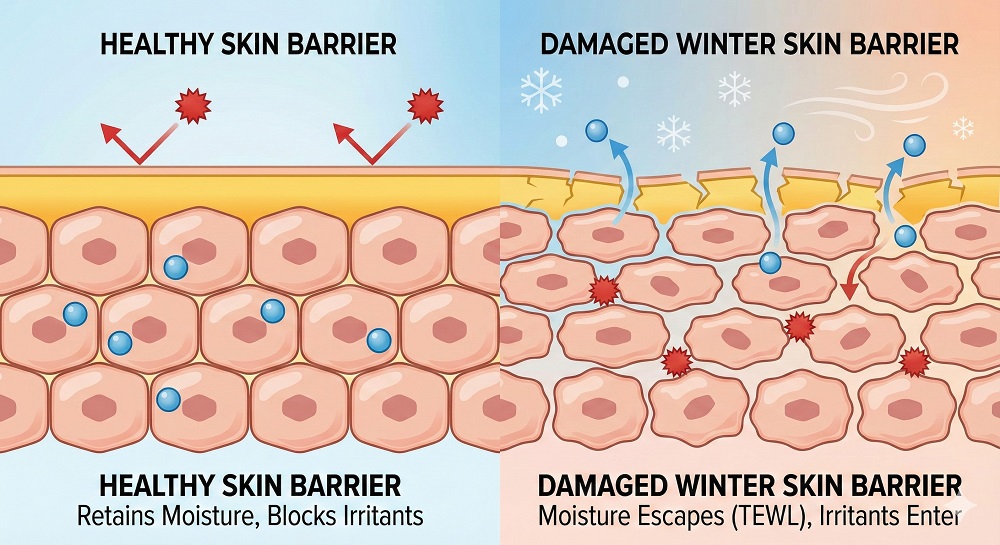
To fix dry skin, you first need to understand Transepidermal Water Loss (TEWL).
Think of your skin barrier (the Stratum Corneum) like a brick wall. The skin cells are the bricks, and the lipids (fats) are the mortar holding them together. In healthy skin, this wall is tight. It keeps hydration in and irritants out.
Winter air has extremely low humidity. Physics dictates that moisture moves from high concentration (your skin) to low concentration (the air). The dry air literally acts like a vacuum, sucking water out of your skin.
When the “mortar” degrades from cold wind, gaps form. Water escapes faster, and redness sneaks in. This is why you need more than just hydration; you need barrier repair.
Dry vs. Dehydrated: Knowing the Difference Changes Everything
Most people use “dry” and “dehydrated” interchangeably. They are not the same. Treating one when you have the other is why your routine is failing.
-
Dry Skin: A skin type. Your skin lacks oil (lipids). It feels rough, flaky, and dry everywhere.
-
Dehydrated Skin: A skin condition. Your skin lacks water. It feels tight and oily at the same time (often producing excess oil to compensate).
In winter, you likely deal with a combination of both. The cold stops oil production (Dryness), and the dry air evaporates water (Dehydration). Your moisturizer must address both issues simultaneously.
The “Golden Trinity” of Winter Ingredients
Stop looking at the pretty packaging and turn the bottle around. A truly effective winter moisturizer for 2026 must contain three specific types of ingredients. We call this the Golden Trinity.
If a product relies only on one, it will fail to keep you hydrated all day.
Top Rated Moisturizers for Winter 2026
We have analyzed formulations to find the best barrier-support options for this year. These picks focus on microbiome health and lipid replenishment.
1. Best for Extreme Dryness & Repair
The Hero: La Roche-Posay Lipikar AP+M Triple Repair or CeraVe Moisturizing Cream These are heavy hitters. They are rich in ceramides and niacinamide. They don’t just sit on top; they actively repair the barrier “mortar.” Perfect for flaky, cracked skin that hurts to touch.
2. Best for Sensitive & Eczema-Prone Skin
The Hero: Vanicream Moisturizing Cream or Aveeno Calm + Restore When your skin is reactive, less is more. These formulas cut out fragrances, dyes, and common irritants. They rely on colloidal oatmeal and petrolatum to soothe inflammation immediately without stinging.
3. Best for Oily-Dehydrated Skin
The Hero: Neutrogena Hydro Boost Gel-Cream (Fragrance-Free) or Byoma Moisturizing Gel Cream Oily skin types fear winter creams because of breakouts. These options use a “gel-cream” hybrid texture. They pack a punch of hydration (Hyaluronic Acid) without the heavy oils that clog pores.
4. Best Budget Pick
The Hero: Eucerin Advanced Repair Cream You don’t need to spend a fortune. This drugstore staple uses Urea, a powerhouse ingredient that both exfoliates dead skin and hydrates deeply. It’s highly effective for rough texture.
How to Maximize Hydration: The “Moisture Sandwich” Method
Buying the best cream matters, but how you apply it matters more. If you apply moisturizer to dry skin, it has no water to trap.
Follow this routine to double your product’s effectiveness:
-
Cleanse: Wash your face with a gentle, non-foaming cleanser.
-
Dampen: Do not towel dry completely. Leave your skin slightly damp, or use a facial mist.
-
Hydrate: Apply your humectant serum (like Hyaluronic Acid) while skin is wet.
-
Seal: Immediately apply your thick winter moisturizer to lock that water in.
-
Slug (Optional): For extreme dryness, apply a thin layer of Vaseline (petrolatum) over dry patches before bed. This is called “slugging” and prevents 99% of water loss.
Frequently Asked Questions (FAQ)
Why is my skin still dry after moisturizing in winter?
You are likely missing an occlusive ingredient. Standard lotions often lack the heavy “sealing” agents needed for winter. Low humidity draws water out of your skin. Apply your moisturizer on damp skin and ensure it contains petrolatum, shea butter, or squalane to physically lock the moisture inside.
What ingredients should I look for in a winter moisturizer?
Look for the “Golden Trinity”: Humectants, Emollients, and Occlusives. Specifically, you want Ceramides to repair the barrier, Glycerin or Hyaluronic Acid to grab water, and a lipid like Shea Butter to seal it all in. Avoid high alcohol content, which dries the skin further.
Is gel or cream better for winter dry skin?
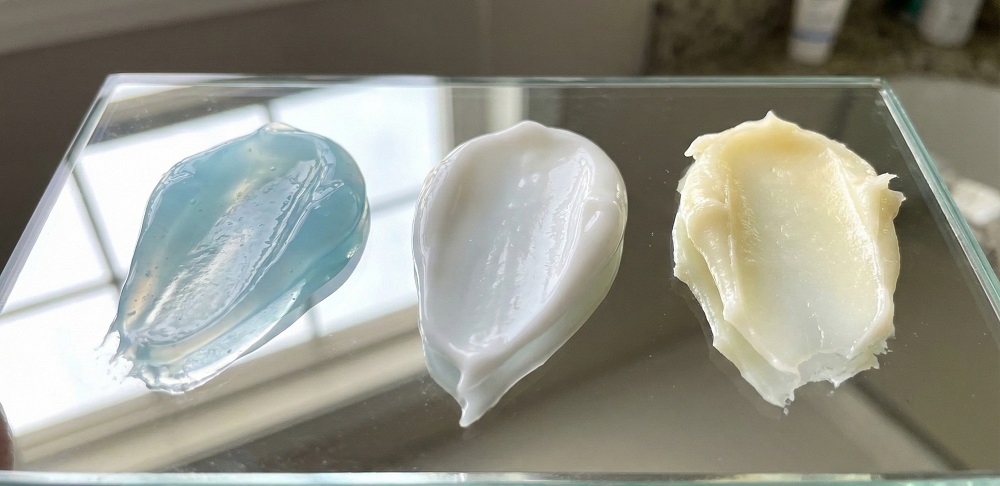
Creams are significantly better for winter. Gels are water-based and evaporate quickly. Creams have a higher oil content, providing a thicker shield against wind and dry heat. If you have oily skin, look for a “gel-cream” hybrid, but avoid pure gels in freezing temps.
How often should I moisturize my face in winter?
Twice daily is the minimum. Apply once in the morning and once before bed. However, if your face feels tight by 2 PM, listen to your skin. Reapply or use a hydrating mist followed by a moisturizer stick. Always moisturize immediately after washing to trap water.
Can drinking water fix dry winter skin?
No, drinking water alone will not cure dry skin. While hydration is healthy, water reaches your vital organs before your skin. Winter dryness is an external damage problem (barrier breakdown). You must treat it externally with topical lipids and moisturizers to see real results.
Final Thoughts
Winter doesn’t have to mean three months of bad skin. By switching to a barrier-focused moisturizer and applying it to damp skin, you can maintain a healthy glow even in freezing temperatures.
For more tips on building your seasonal routine, explore the skincare guides here at Meo Beauty. Your barrier will thank you.