Is your hair breaking, snapping, or feeling like straw?
You’ve probably spent hundreds on “miracle” conditioners that promise the world but deliver nothing. Here is the truth: high-end products often rely on the exact same active ingredients sitting in your pantry right now. The difference is simply marketing.
At Meo Beauty, we believe in diagnosis before treatment. Slapping random food on your head won’t fix damage—in fact, using the wrong ingredient can make it worse. If your hair is brittle from protein overload, adding an egg mask will snap it off. If it’s mushy from moisture overload, adding oil will make it limp.
This guide will teach you the science of DIY hair masks for dry damaged hair, helping you customize a routine that actually repairs your strands.
The Science: Does Your Hair Need Protein or Moisture?
Before you crack an egg or peel a banana, you must know what your hair is asking for. Damage manifests in two primary ways: lack of structure (Protein) or lack of hydration (Moisture).
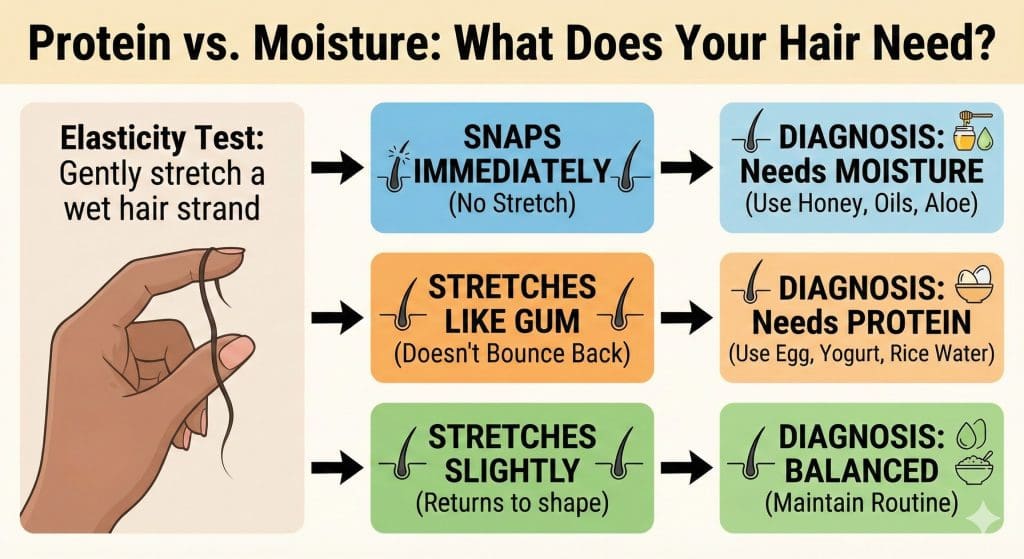
The Elasticity Test (Do This First):
Take a single strand of wet hair and gently stretch it.
- If it snaps immediately with no stretch: Your hair is dry and brittle. It needs Moisture.
- If it stretches and stretches like gum (and doesn’t bounce back): Your hair is weak and mushy. It needs Protein.
- If it stretches slightly and returns: Your hair is balanced.
Top 3 Moisturizing Masks for Dry, Brittle Hair
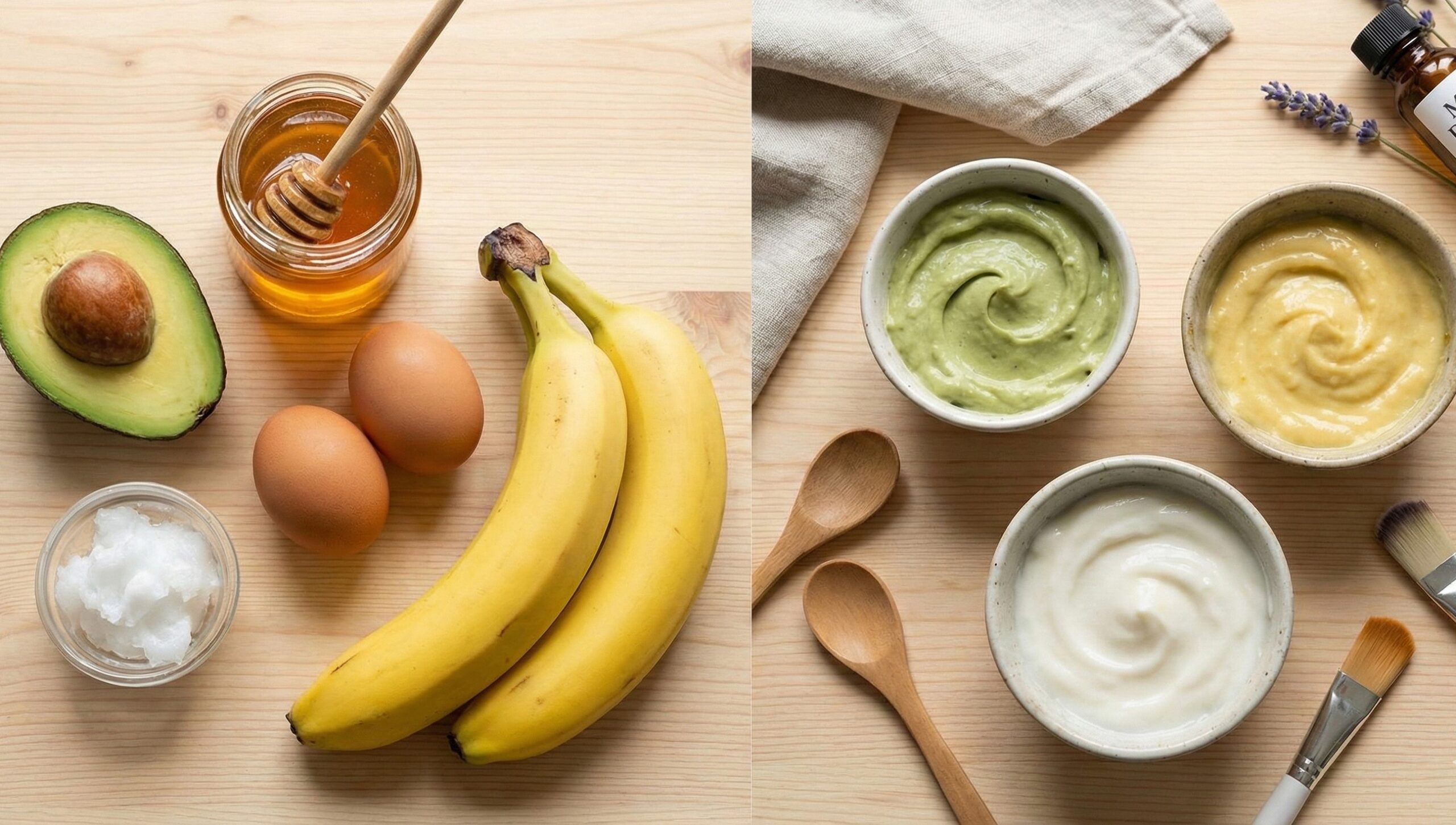
If your hair feels rough, tangles easily, or has a “straw-like” texture, you need humectants (to draw water in) and emollients (to seal it there).
1. The “Honey & Oil” Humectant Bomb
Best for: High porosity hair that drinks water but dries out instantly.
Honey is a natural humectant, meaning it grabs moisture molecules from the air and binds them to your hair shaft. Olive oil acts as an occlusive, sealing that moisture inside the cortex.
- Ingredients: 2 tbsp Raw Honey + 3 tbsp Extra Virgin Olive Oil.
- Method: Mix until smooth. Apply to damp hair (water helps the honey work).
- Duration: 30 minutes under a shower cap.
2. The Banana Smoothie for Frizz Control
Best for: Dull, frizzy hair that lacks shine.
Bananas are rich in silica, a mineral that helps your body synthesize collagen and makes hair stronger and thicker. The natural oils in bananas also smooth the cuticle layer, reducing friction and frizz.
- Ingredients: 1 Ripe Banana + 1 tbsp Almond Oil.
- Method: Blend this in a blender. (Do not mash by hand, or you will be picking banana chunks out of your hair for days).
- Duration: 20 minutes. Rinse thoroughly.
3. Avocado & Coconut Deep Dive
Best for: Thick, coarse hair that needs heavy duty softening.
Coconut oil is one of the few oils small enough to penetrate the hair shaft (rather than just sitting on top). Avocado provides heavy fatty acids that fill in the cracks of a damaged cuticle.
- Ingredients: 1/2 Ripe Avocado + 2 tbsp Coconut Oil.
- Method: Whip until creamy. Apply from mid-lengths to ends.
- Duration: 45 minutes.
Top 3 Protein Treatments for Chemically Damaged Hair
If your hair is bleached, colored, or chemically straightened, the internal bonds are likely broken. You need hydrolysed proteins to temporarily patch these gaps and add structure.
4. The Egg & Mayo Reconstructor
Best for: Weak hair that breaks when brushing.
Eggs are the gold standard for DIY protein. The yolk contains fats that condition, while the whites contain enzymes that digest bacteria and strip away excess oil.
- Ingredients: 1 Whole Egg + 2 tbsp Mayonnaise.
- Method: Whisk until frothy. Apply to clean, damp hair.
- Duration: 20 minutes. Rinse with COOL water (Hot water will scramble the egg in your hair).
5. Yogurt & Honey Gentle Repair
Best for: Fine hair that gets weighed down easily.
Greek yogurt contains lactic acid (a gentle exfoliator for the scalp) and milk proteins that strengthen the hair without making it stiff.
- Ingredients: 3 tbsp Plain Greek Yogurt + 1 tsp Honey.
- Method: Mix and apply from roots to tips.
- Duration: 15–20 minutes.
6. Rice Water Rinse
Best for: Shedding and thinning edges.
Used for centuries by the Yao women of China, fermented rice water contains inositol, a carbohydrate that repairs damaged hair and stays inside the hair even after rinsing.
- Ingredients: 1/2 cup Rice + 2 cups Water.
- Method: Soak rice for 24 hours. Strain the water. Pour over hair after shampooing.
- Duration: Leave for 5–10 minutes, then rinse.
How to Apply a DIY Hair Mask for Maximum Absorption
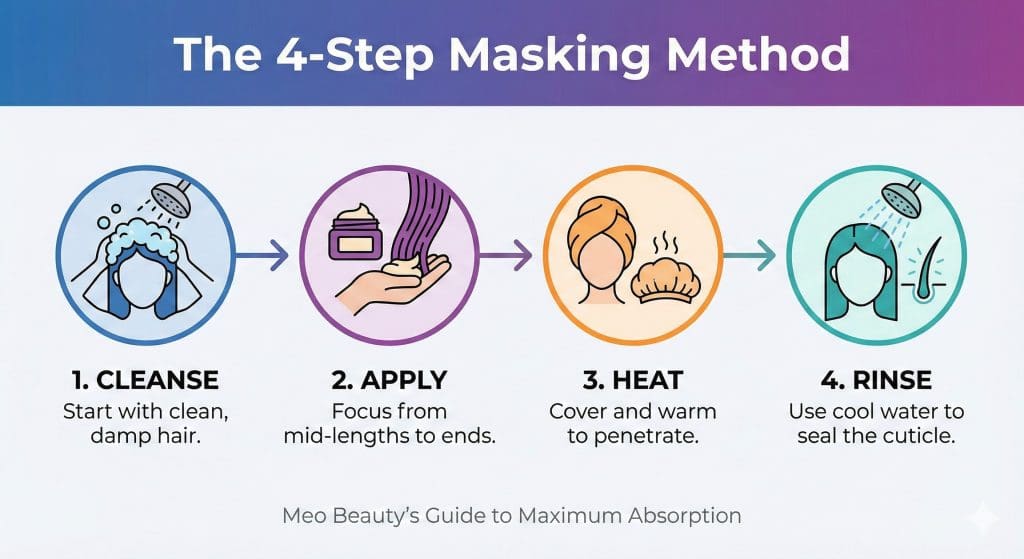
Even the best recipe won’t work if it sits on top of dirt or silicone buildup. Follow this Meo Beauty protocol to ensure penetration.
1. Cleanse (Don’t Skip This)
Always apply masks to clean, damp hair. Use a clarifying shampoo if you have heavy product buildup. Low porosity hair, in particular, needs clean cuticles to absorb anything.
2. Section and Saturate
Divide hair into 4 sections. Apply the mask from the ends working your way up. Avoid the scalp unless the mask is specifically for dandruff (like yogurt or aloe).
3. The Greenhouse Effect (Heat)
This is the secret weapon. Put on a plastic shower cap, then wrap a hot towel around it. The heat opens the hair cuticle, allowing ingredients like coconut oil and honey to penetrate deeper into the cortex.
4. The Cool Seal
Rinse with cool water. Cold water signals the cuticle to close, locking the moisture and nutrients inside the shaft.
| Concept A: Commercial Masks | Concept B: DIY Masks |
| Contains preservatives (Parabens) for shelf life. | Fresh ingredients with active enzymes. |
| Often relies on silicones to “fake” shine. | Uses oils and butters to actually repair. |
| Standardized for “all hair types.” | Highly customizable to your specific porosity. |
| Expensive ($20 – $60 per jar). | Cost-effective (<$2 per treatment). |
Common Mistakes: Why Your DIY Mask Didn’t Work
- Using Hot Water on Egg Masks: This cooks the egg, leaving white bits stuck in your hair that are impossible to remove.
- Leaving it Overnight: Do not sleep in DIY masks. Wet hair is fragile, and prolonged moisture can lead to “hygral fatigue” (where the hair expands and contracts too much), causing breakage. 30–60 minutes is sufficient.
- Ignoring Porosity: If you have low porosity hair (hair that floats in water), avoid heavy protein masks. Focus on steam and humectants (honey/aloe) instead.
Frequently Asked Questions (FAQ)
How often should I use a homemade hair mask?
Once a week for damaged hair.
If your hair is severely damaged, you can increase this to twice a week, but alternate between moisture and protein treatments to keep the balance. Healthy hair only needs a maintenance treatment bi-weekly.
Do these masks actually fix split ends?
No, they seal them temporarily.
Nothing can physically fuse a split hair back together permanently (despite what commercials say). However, ingredients like beeswax or thick oils can glue the split down temporarily, improving appearance and preventing further splitting until your next trim.
Which oils penetrate the hair shaft best?
Coconut, Olive, and Avocado Oil.
Most oils (like Jojoba or Argan) are “sealants”—they sit on top of the hair to lock moisture in. Coconut oil is unique because its molecular weight is small enough to actually enter the hair structure and prevent protein loss.
Can I save leftover mask mixture?
Generally, no.
Because these recipes contain fresh food ingredients (eggs, yogurt, fruit) and no preservatives, bacteria grow rapidly. Discard any leftovers immediately.
Ready to start your natural hair journey?
Consistency is key. A single mask won’t undo years of bleaching, but a weekly ritual will transform your texture over time. For more tips on holistic beauty and natural skincare, browse our latest guides at Meo Beauty.