You treat the pimple, but the dark spot stays for months. It is the most frustrating cycle in skincare.
You have likely tried “brightening” serums that promised overnight results but delivered nothing but sticky residue and irritation. The problem isn’t usually the promise; it’s the chemistry. Most Vitamin C products on the market are either too weak to work or so unstable they oxidize before you even open the bottle.
At Meo Beauty, we don’t believe in miracle cures. We believe in clinical data.
This guide skips the marketing fluff. We are breaking down exactly how to choose a stable, potent Vitamin C serum that actually inhibits melanin and fades stubborn hyperpigmentation.
The Science: How Vitamin C Actually Fades Dark Spots
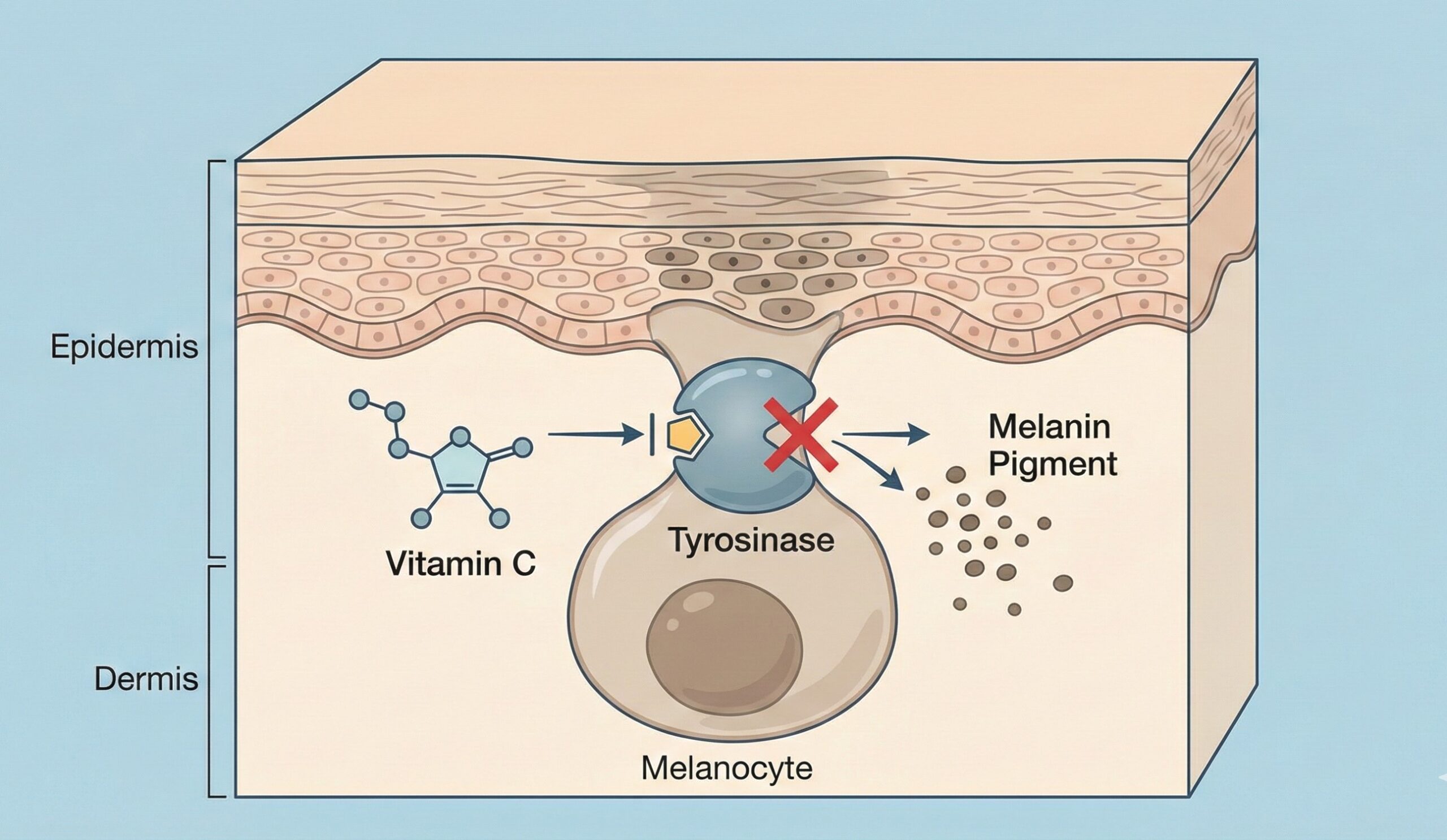
Vitamin C does not “bleach” your skin. Instead, it acts as a biological “stop” sign for pigment production.
Hyperpigmentation—whether from sun damage or acne scars—is caused by an enzyme called tyrosinase. When your skin is stressed (by UV rays or inflammation), tyrosinase tells your cells to pump out melanin as a defense mechanism.
Vitamin C is a tyrosinase inhibitor. It interrupts that signal. By blocking the enzyme, it prevents new pigment from forming. Simultaneously, its acidic nature gently exfoliates surface cells, helping to fade the old, dark pigment that is already visible.
But here is the catch: it only works if the molecule can penetrate the skin barrier.
L-Ascorbic Acid vs. Derivatives: Which Form Do You Need?
Not all Vitamin C is created equal. The name on the front of the bottle matters less than the ingredient list on the back.
There are two main categories: pure L-Ascorbic Acid (LAA) and Derivatives.
L-Ascorbic Acid is the gold standard. It has the most clinical data proving it works. However, it is notoriously unstable and can sting sensitive skin. Derivatives (like THD Ascorbate) are chemically modified to be stable and gentle, though they may take longer to show results.
Here is how to decide:
| Feature | L-Ascorbic Acid (LAA) | Vitamin C Derivatives (e.g., THD, SAP) |
| Potency | High (Directly active) | Moderate (Must convert in skin) |
| Speed of Results | Fast (4-8 weeks) | Slower (8-12 weeks) |
| Stability | Low (Oxidizes quickly) | High (Shelf-stable) |
| Best For | Resilient / Oily Skin | Sensitive / Dry / Acne-Prone Skin |
| Irritation Risk | Moderate to High | Low |
The Best Vitamin C Serums for Hyperpigmentation
We analyzed dozens of formulas to find the ones that balance potency with stability.
[Interactive: Jump to your skin type: Oily Skin | Dry Skin | Sensitive Skin]
1. Best Overall (The Gold Standard)
The Criteria: 15% L-Ascorbic Acid + Ferulic Acid + Vitamin E.
This specific trio is patented for a reason. Ferulic Acid and Vitamin E double the photoprotection of Vitamin C and stabilize the formula. Without them, L-Ascorbic Acid degrades too fast. Look for brands like SkinCeuticals (the pioneer) or science-backed competitors like Dr. Brenner or Timeless that replicate this exact pH-balanced ratio.
2. Best Budget-Friendly Option
The Criteria: Fresh manufacturing and air-tight packaging.
You don’t need to spend $180. Brands like Geek & Gorgeous or Timeless offer fresh batches of 15-20% Vitamin C for a fraction of the price. The key here is the manufacturing date. Since these pure formulas turn bad quickly, buying from a brand that mixes small batches is crucial.
3. Best for Sensitive Skin
The Criteria: Tetrahexyldecyl Ascorbate (THD).
If L-Ascorbic Acid makes you red or itchy, stop using it. Switch to a serum using THD Ascorbate. It is oil-soluble, meaning it penetrates deeper with zero stinging. Vanicream and Sunday Riley offer excellent options in this category.
4. Best for Acne Scars (PIH)
The Criteria: Vitamin C + Salicylic Acid or Niacinamide.
For Post-Inflammatory Hyperpigmentation (PIH), you want a multi-pronged attack. A serum that combines Vitamin C with Salicylic Acid (to clear pores) or Niacinamide (to soothe inflammation) prevents new acne while fading old marks.
How to Apply Vitamin C for Maximum Absorption
Applying products in the wrong order can render them useless. Vitamin C is pH-dependent. If you layer it over a thick moisturizer, it cannot penetrate.
The Morning Routine for Results:
-
Cleanse: Remove oil and dirt.
-
Vitamin C Serum: Apply to dry skin.
-
The Wait Rule: Let it absorb for 60 seconds.
-
Moisturizer: Lock it in.
-
SPF 30+: This is non-negotiable.
Pro Tip: Never mix Vitamin C with Retinol or AHAs in the same layer. It creates an acidity conflict that damages your skin barrier. Use Vitamin C in the AM and Retinol in the PM.
The “Hot Dog Water” Test: Oxidation & Storage
Many users complain that their serum smells like metallic coins or hot dog water.
This is actually a good sign.
That specific scent comes from Ferulic Acid, the stabilizer we mentioned earlier. It indicates the formula is potent and fragrance-free.
However, color tells a different story. L-Ascorbic Acid is clear or pale champagne when fresh. As it touches air, it oxidizes and turns orange, then brown.
-
Clear/Pale Yellow: Potent and safe to use.
-
Deep Orange: Losing potency (50% effective).
-
Brown: Oxidized. It is now a pro-oxidant and can actually cause more damage. Throw it away.
To extend shelf life, store your serum in the fridge or a cool, dark drawer.
Frequently Asked Questions (AEO Optimized)
Does Vitamin C serum actually remove hyperpigmentation?
Yes, it inhibits the enzyme that creates dark spots.
Vitamin C blocks tyrosinase, preventing melanin production. With consistent daily use, it fades existing sun spots, melasma, and acne scars while preventing new ones from forming.
How long does it take for Vitamin C to fade dark spots?
Visible results typically take 8 to 12 weeks.
You may see “brightness” after 2 weeks, but fading pigment takes time. Skin cells turn over every 28 days. You need at least two or three full cycles to see a significant reduction in deep pigment.
Can I use Vitamin C with Retinol?
Yes, but apply them at different times of the day.
Apply Vitamin C in the morning to protect against UV damage and pollution. Apply Retinol at night to repair collagen. Do not layer them immediately one after the other to avoid irritation.
Why does my Vitamin C serum smell like hot dog water?
It indicates the presence of Ferulic Acid.
This smell is normal for high-potency, fragrance-free serums containing Ferulic Acid, a powerful antioxidant that stabilizes Vitamin C. If the smell turns sour or rancid, however, the product has expired.
For more science-backed skincare guides and ingredient deep-dives, visit us at https://meobeauty.net/.