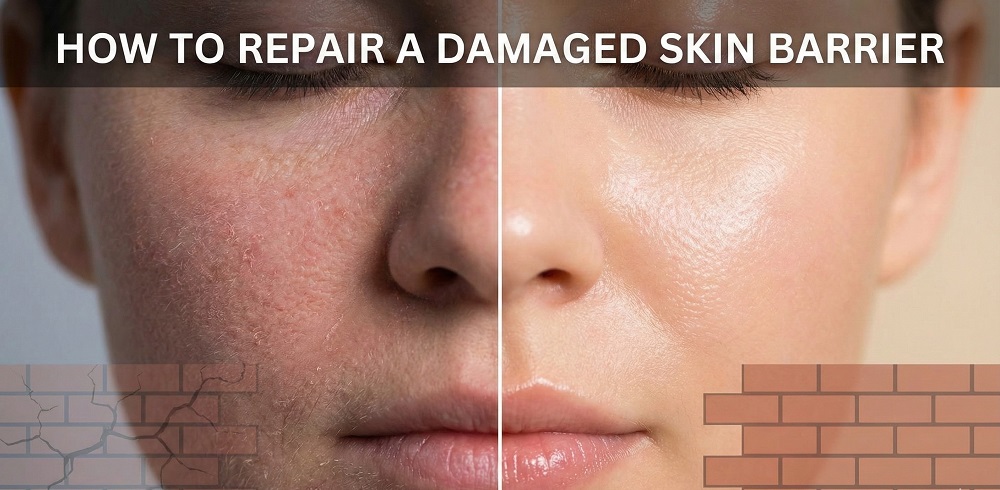
Does your skin sting when you apply your favorite moisturizer? Does it feel tight, itchy, or look persistently red, no matter how much water you drink?
You aren’t just dealing with dry skin. You are likely facing a damaged skin barrier.
Ignoring these signs can lead to chronic inflammation, premature aging, and increased sensitivity. But don’t panic. Your skin is resilient. With the right science-backed approach, you can restore its health.
At https://meobeauty.net/, we believe in smart skincare. This guide will walk you through the biology of your barrier and provide a proven “Reset Protocol” to heal your skin and get your glow back.
What is the Skin Barrier? (The Brick and Mortar Model)
To fix the problem, you first need to understand the mechanism.
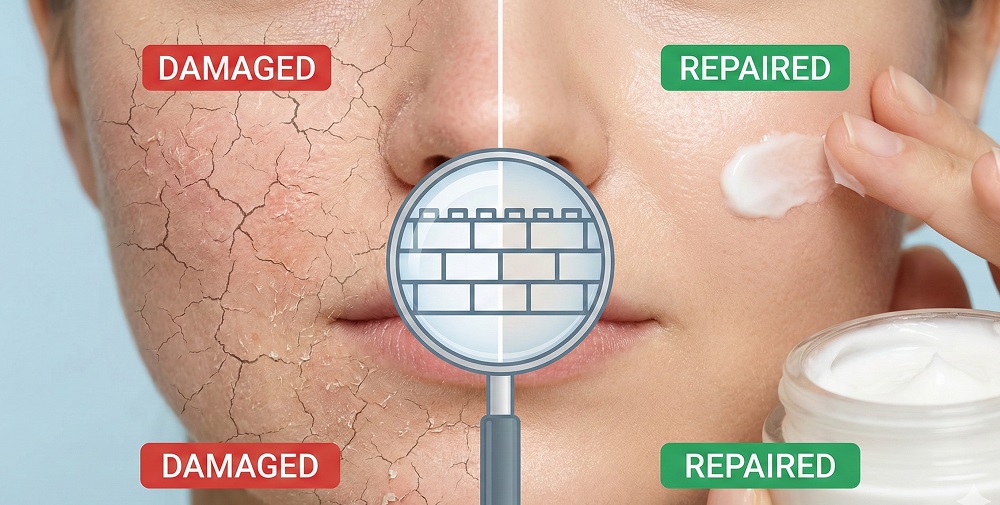
Your skin barrier, formally known as the stratum corneum, is the outermost layer of your skin. Dermatologists often describe it using the “Brick and Mortar” analogy:
-
The Bricks: Corneocytes (tough skin cells).
-
The Mortar: Lipids (ceramides, cholesterol, and fatty acids) that hold the cells together.
When this structure is intact, it keeps hydration in and irritants out. When the “mortar” breaks down, your barrier becomes compromised. This leads to Transepidermal Water Loss (TEWL), where moisture evaporates rapidly, leaving your skin vulnerable to bacteria and environmental stress.
Healthy vs. Damaged Barrier: What’s the Difference?
| Feature | Healthy Skin Barrier | Damaged Skin Barrier |
| Texture | Smooth, soft, and plump | Rough, flaky, or scaly |
| Sensation | Comfortable, no tightness | Tightness, stinging, itching |
| Appearance | Even tone, “glowy” | Redness, dullness, inflammation |
| Reaction | Tolerates active ingredients | Reacts poorly to products |
| Moisture | Retains hydration well | Dries out quickly (High TEWL) |
5 Signs Your Skin Barrier is Compromised
How do you know if you need repair or just a better moisturizer? If you experience two or more of these symptoms, your barrier is likely in trouble:
-
Stinging Sensation: Products that usually feel fine suddenly burn upon application.
-
Persistent Redness: Your skin looks inflamed or flushed without a clear cause.
-
Breakouts: A weakened shield allows acne-causing bacteria to penetrate easier.
-
Rough Texture: The surface feels like sandpaper rather than skin.
-
Tightness: Your face feels “too small” for your bone structure, especially after cleansing.
Common Causes: Why Did This Happen?
You didn’t wake up with a damaged barrier by accident. It is usually the result of specific external aggressors.
The most common culprit is over-exfoliation. Using harsh scrubs, high-percentage acids, or too many actives at once can strip the “mortar” (lipids) right out of your skin.
Other factors include:
-
Harsh Cleansers: Sulfates that strip natural oils and disrupt pH balance.
-
Environmental Stress: Extreme cold, wind, or dry air.
-
UV Damage: Skipping sunscreen weakens the skin’s structural integrity.
How to Repair Your Skin Barrier (The Meo Beauty Reset Protocol)
Healing requires a strategy. We call this the Meo Beauty Reset Protocol. It focuses on simplification and hydration.
Phase 1: The “Stop” Phase
Immediately pause all “active” treatments. This is non-negotiable. Put your retinols, exfoliating acids (AHAs/BHAs), and Vitamin C serums in the drawer. Your skin is injured; it cannot handle a workout right now.
Phase 2: The “Soothe” Phase
Switch to a gentle, non-foaming cleanser. Wash your face with lukewarm water—never hot. Hot water melts away your natural oils, which is the last thing you want.
Phase 3: The “Seal” Phase
This is where the magic happens. You need to artificially replace the missing lipid barrier while your skin repairs itself.
-
Hydrate: Apply a serum with humectants (like glycerin or hyaluronic acid) to damp skin.
-
Moisturize: Use a rich cream containing the “Holy Trinity” of ingredients (see below).
-
Occlude: At night, apply a thin layer of a healing ointment or balm to physically lock in the moisture.
The Holy Trinity of Repair Ingredients
When shopping for recovery products, ignore the marketing hype. Turn the bottle over and look for these specific ingredients on the label:
-
Ceramides: These make up about 50% of your skin’s lipid barrier. They are the glue that holds your skin cells together.
-
Cholesterol & Fatty Acids: Essential partners to ceramides that speed up recovery.
-
Niacinamide: A powerhouse that boosts ceramide production and reduces inflammation.
-
Panthenol (Vitamin B5): Excellent for soothing and calming red, irritated skin.
What to Avoid While You Heal (The “No” List)
Until your skin no longer stings and the redness subsides, avoid these ingredients completely:
-
Retinoids (Retinol, Tretinoin): Too stimulating for broken skin.
-
Exfoliating Acids: Glycolic, Salicylic, and Lactic acids will only deepen the damage right now.
-
Fragrance & Essential Oils: Common irritants that can cause contact dermatitis on compromised skin.
-
Physical Scrubs: Do not scrub flakes away. You will only create micro-tears.
How Long Does it Take to Heal?
Patience is your most important ingredient.
Generally, it takes 2 to 4 weeks to repair a damaged skin barrier.
This timeline aligns with your skin’s natural cycle. Skin cells take roughly 28 days to turnover. If the damage is superficial, you might feel relief in a few days. However, restoring the full function of the stratum corneum requires consistent care over a full cycle.
FAQ: Your Barrier Questions Answered
Q: What is the fastest way to fix a skin barrier?
Stop exfoliating immediately and focus on hydration.
The quickest path to recovery is cutting out all irritants and applying a lipid-rich moisturizer containing ceramides. sealing it with an occlusive balm at night accelerates the process.
Q: Can I use retinol on a damaged skin barrier?
No, absolutely not.
Retinol increases cell turnover, which can be irritating even on healthy skin. On a damaged barrier, it causes significant inflammation and delays healing. Wait until your skin is fully recovered before reintroducing it.
Q: Does drinking water help repair the skin barrier?
Yes, but it is not enough on its own.
Internal hydration supports cell health, but barrier damage is a surface issue. You must apply topical hydration (humectants) and oils (lipids) to stop water from evaporating through the cracks in your skin.
Q: What are the first signs of healing?
Reduced redness and no stinging.
You will know it’s working when your skin no longer burns when you apply products, the tightness disappears after cleansing, and the texture feels softer and less rough.
Ready to build a routine that supports your skin health? Explore more guides and product recommendations at https://meobeauty.net/.